
Historical Bothwell in pictures
These are a few of the hundreds of images held by the Bothwell Historical Society in our History Museum at 4 Marketplace, Bothwell (with just a few from elsewhere). Each image has a story which we’ve done our best to include.
To see the full sized image, either click the image itself, or the “View full size B&W” link in the text. There’s also a “View in colour” link which is the same image rendered with modern technology in colour. Some think we should not do this because this is not the way the images were shot. But as soon as colour photograpy became available, monochrome became, and remains, almost solely reserved for artistic images that rely on monochrome rendering. If the photographers back then had had access to colour photography, they would almost certainly have used it, as do photographers today. These days, we can use AI to make the best guess at what the colours would have been.
If you’d prefer to see only the original monochrome images, don’t click the link. If you are curious as to what the scene might have looked like if they’d had colour photography back then, go ahead and click it.
If available, the name of the photographer is credited. If there is no credit, it means the photograher’s name is not known.
The Castle Hotel – about 1890
View full size B&W
View in colour
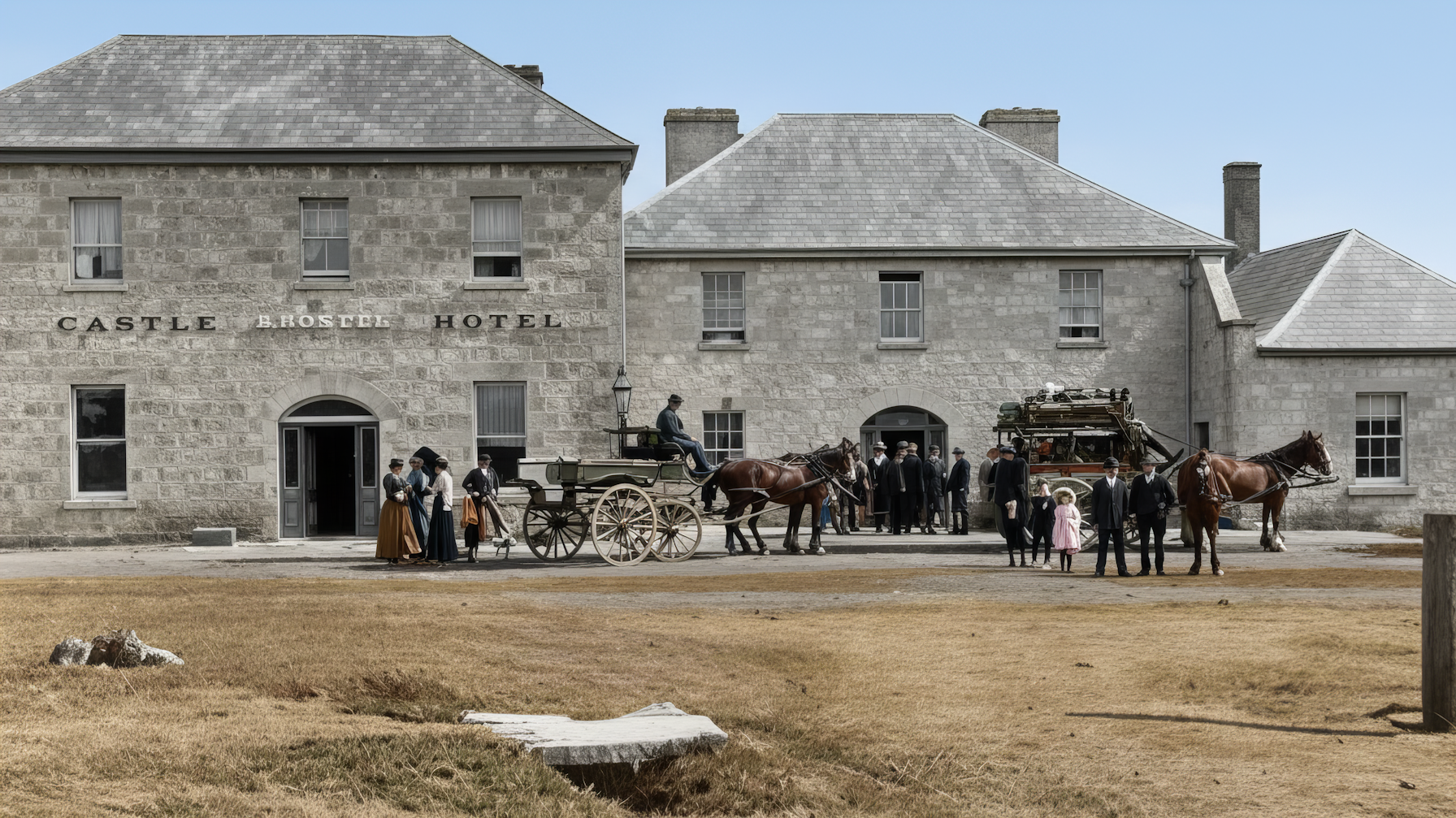
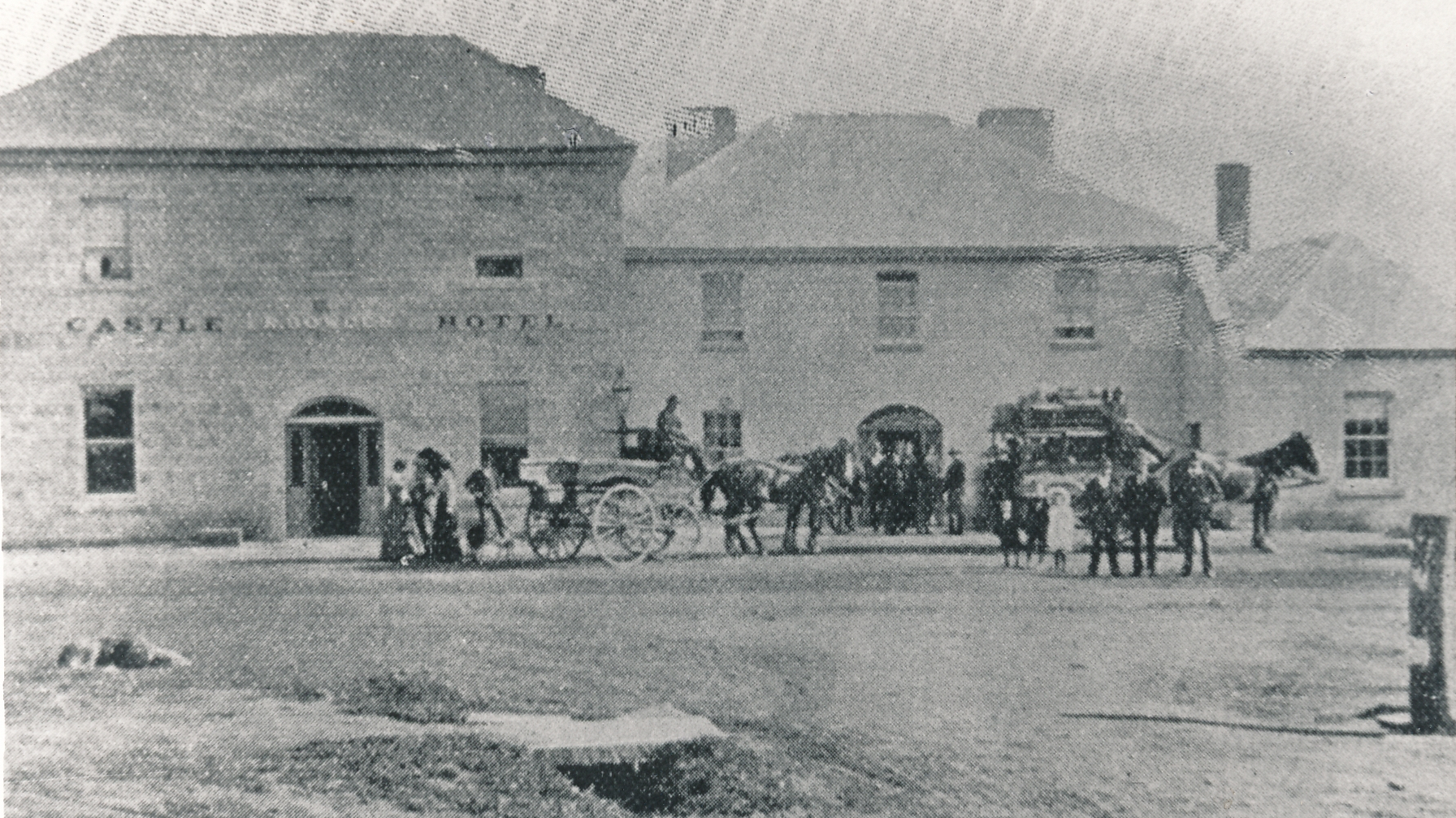
A horse drawn coach and a cart outside the Castle Hotel about 1890. In Bothwell, Tasmania, the traditional horse-drawn stagecoach service from Hobart effectively ceased by the early 1890s, primarily due to the opening of the Apsley railway line in 1891, though horse-drawn coaches from Apsley to Bothwell continued until fossil fuel transport began in the early 20th century.
Note that the sandstone on the building is not painted. The current licensee has plans to remove the paint which was later applied to preserve the sandstone.
Image source: Bothwell Historical Society collection
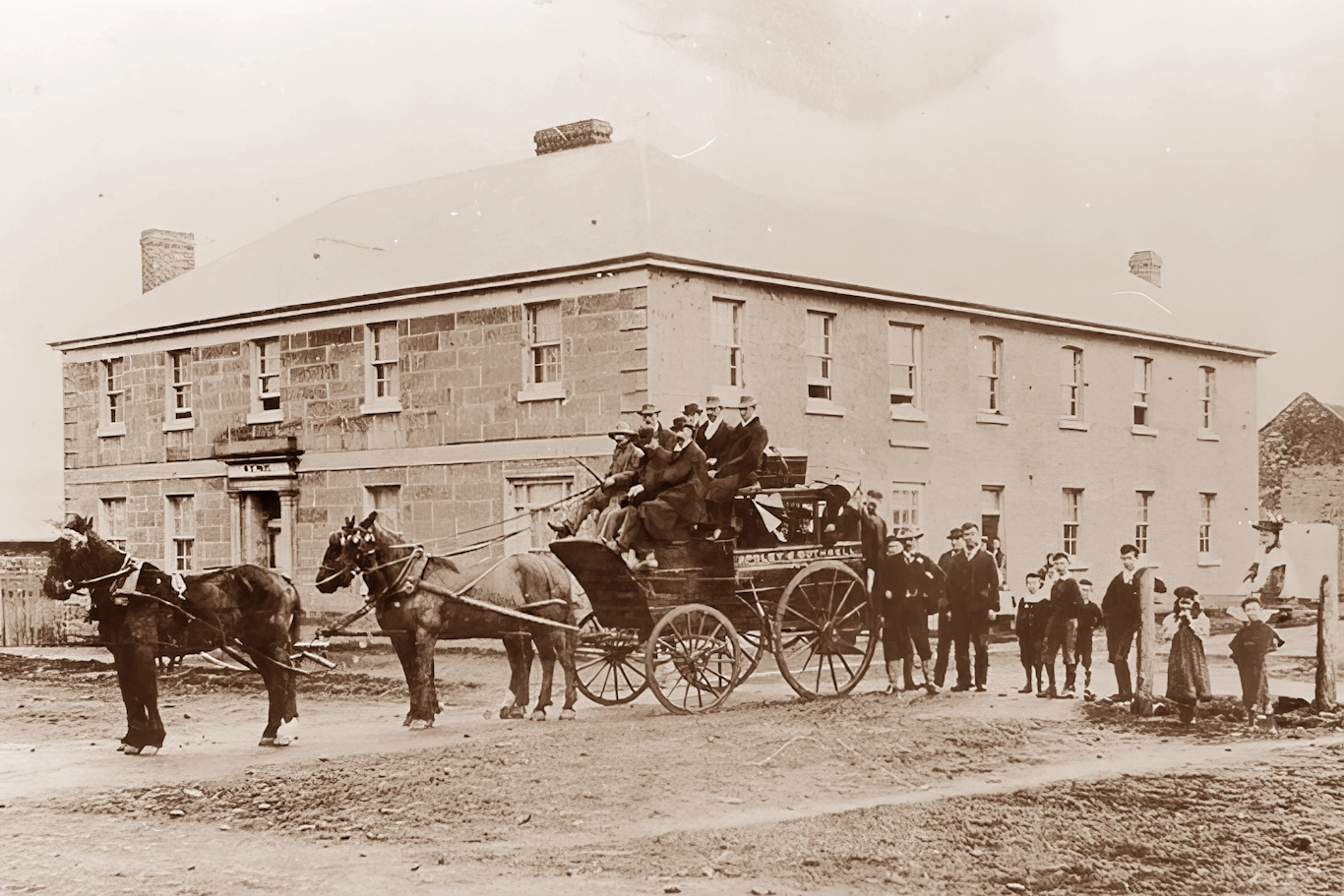
Coach outside the Crown Inn – about 1890
View full size B&W
View in colour
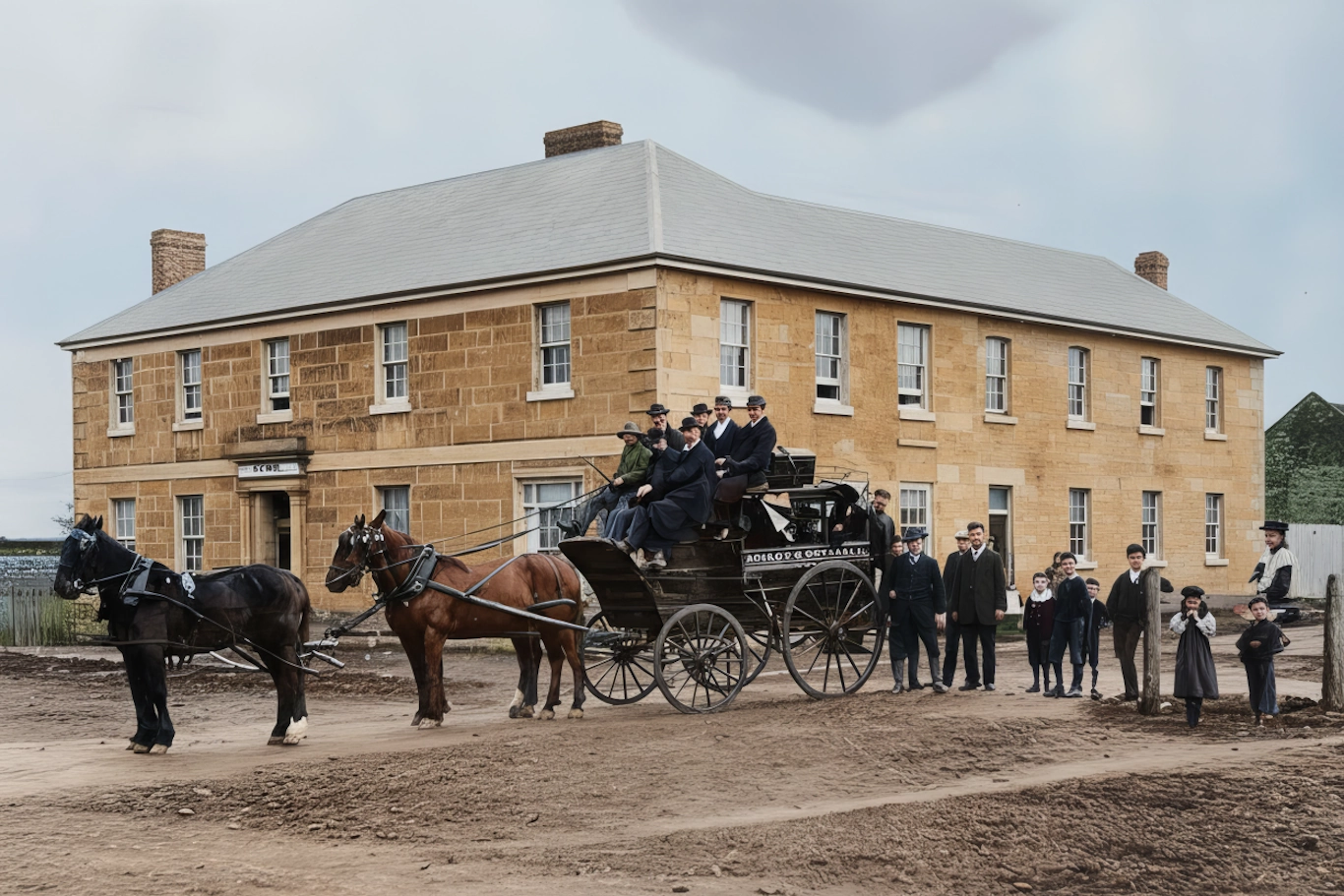
“Bothwell Hotel of the Highlands (formerly known as “Crown Inn” and “Bothwell Grange”) is an historic icon of the Tasmanian Central Highlands. It has been in operation since 1836 with a variety of capacities; a brewery, racing stables, pub, tavern, morgue, inn and guesthouse. Today, Greg and Frannie Ramsay, from the nearby Ratho Farm Highlands Resort, run the hotel and have seven ensuite rooms, and a shared lounge/dining room, with access to a communal kitchen.”
Image source: Bothwell Historical Society collection
Info source: https://bothwellhotel.com.au
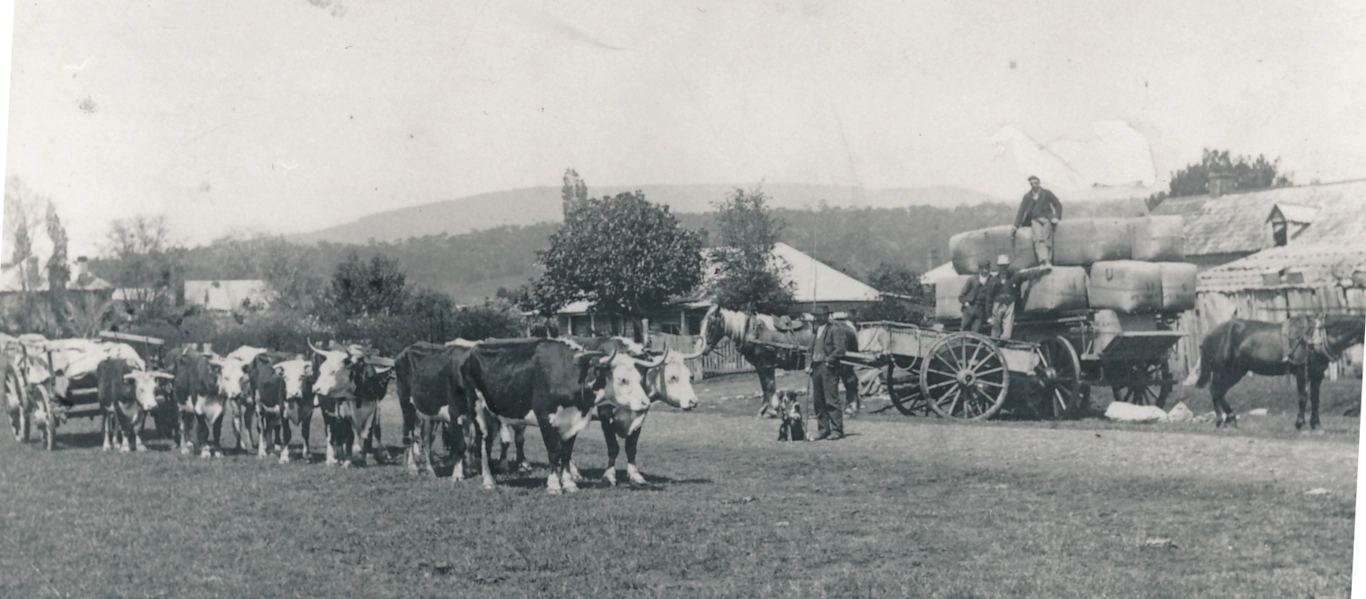
Blake’s Brewery with bullock wagon
View full size B&W
View in colour
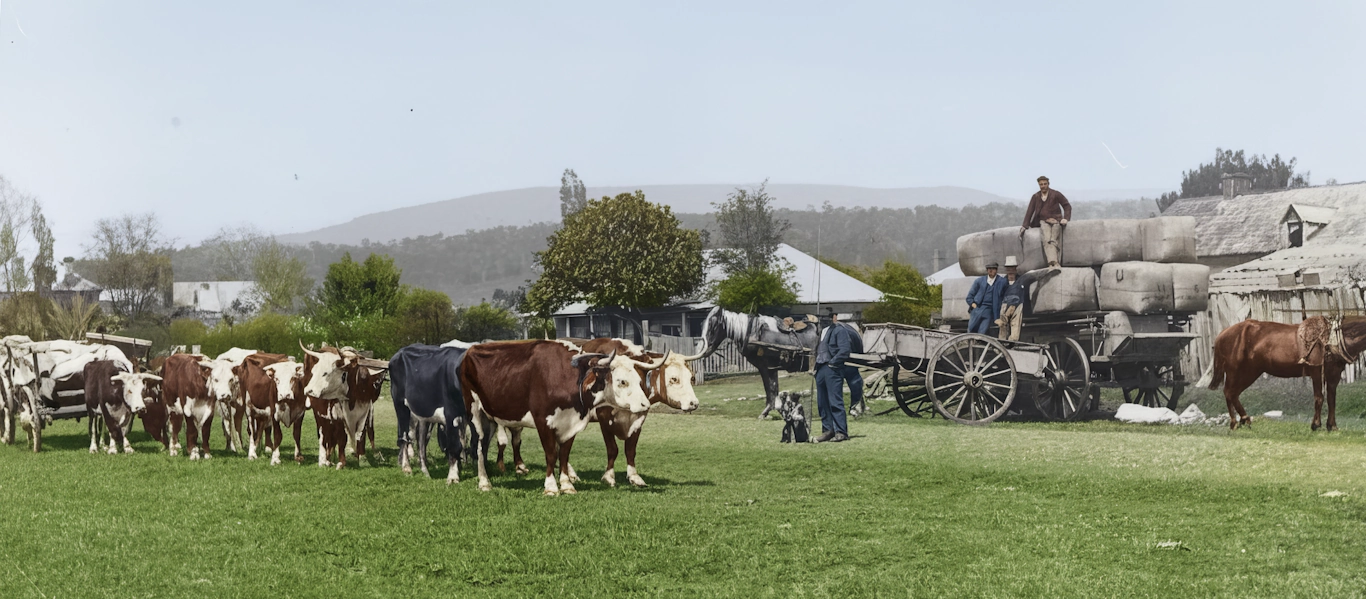
From our publiction Bothwell Revisited, Bothwell Historical Society, 2001:
“Blake’s Brewery at 4 Patrick Street, Bothwell, was the last brewery in the town. Through a series of names and owners it operated between 1836 and 1902. However, this date is disputed, because K. G. Downie recalled that in the 1920s Blake’s brewery supplied beer to shearers passing through Bothwell on their way from ‘Glenelg’ to ‘Dungrove’. Long delays occurred as a result. After the Blakes moved their brewing operation to Hobart, the buildings continued to be used in conjunction with the Blake’s cartage.”
Image source: Bothwell Historical Society collection
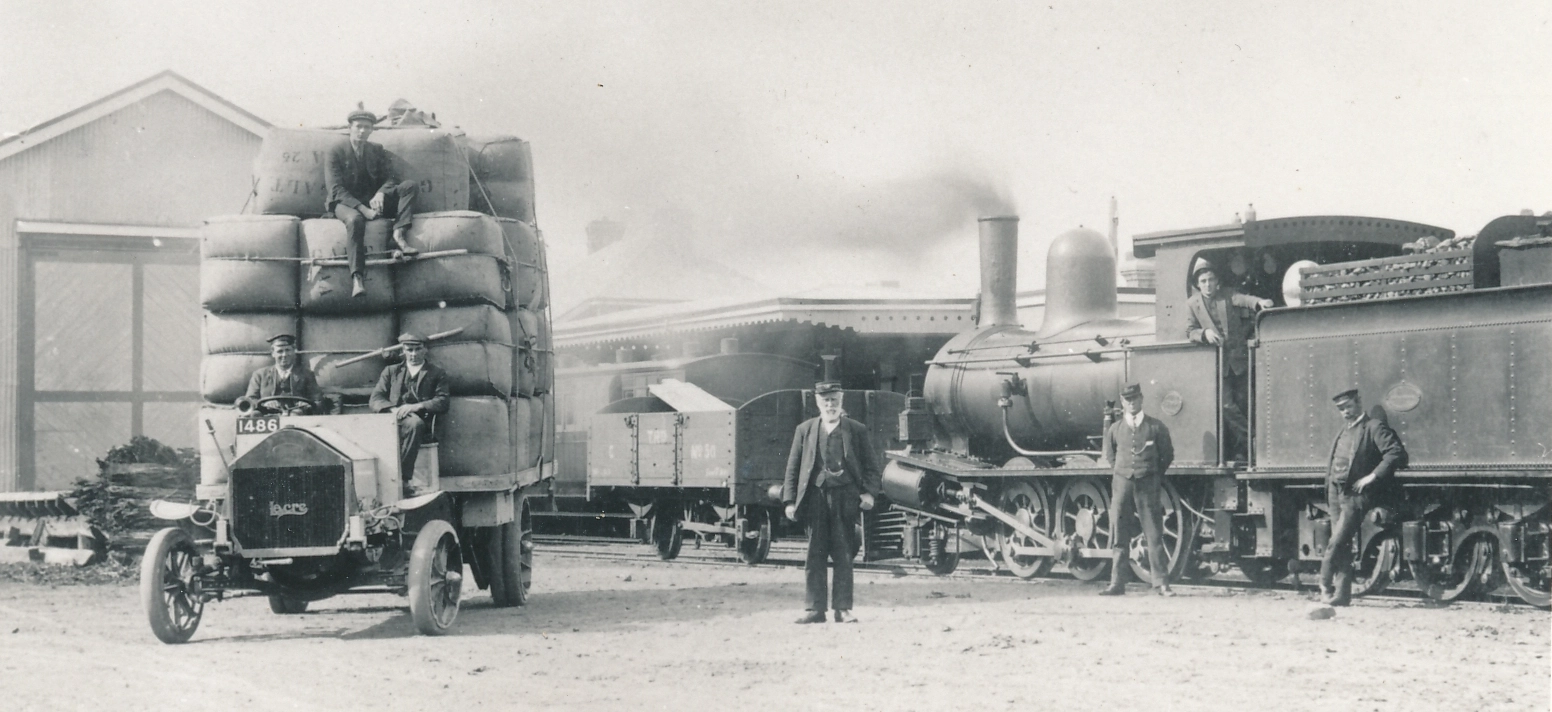
Blake’s Truck at Apsley
View full size B&W
View in colour
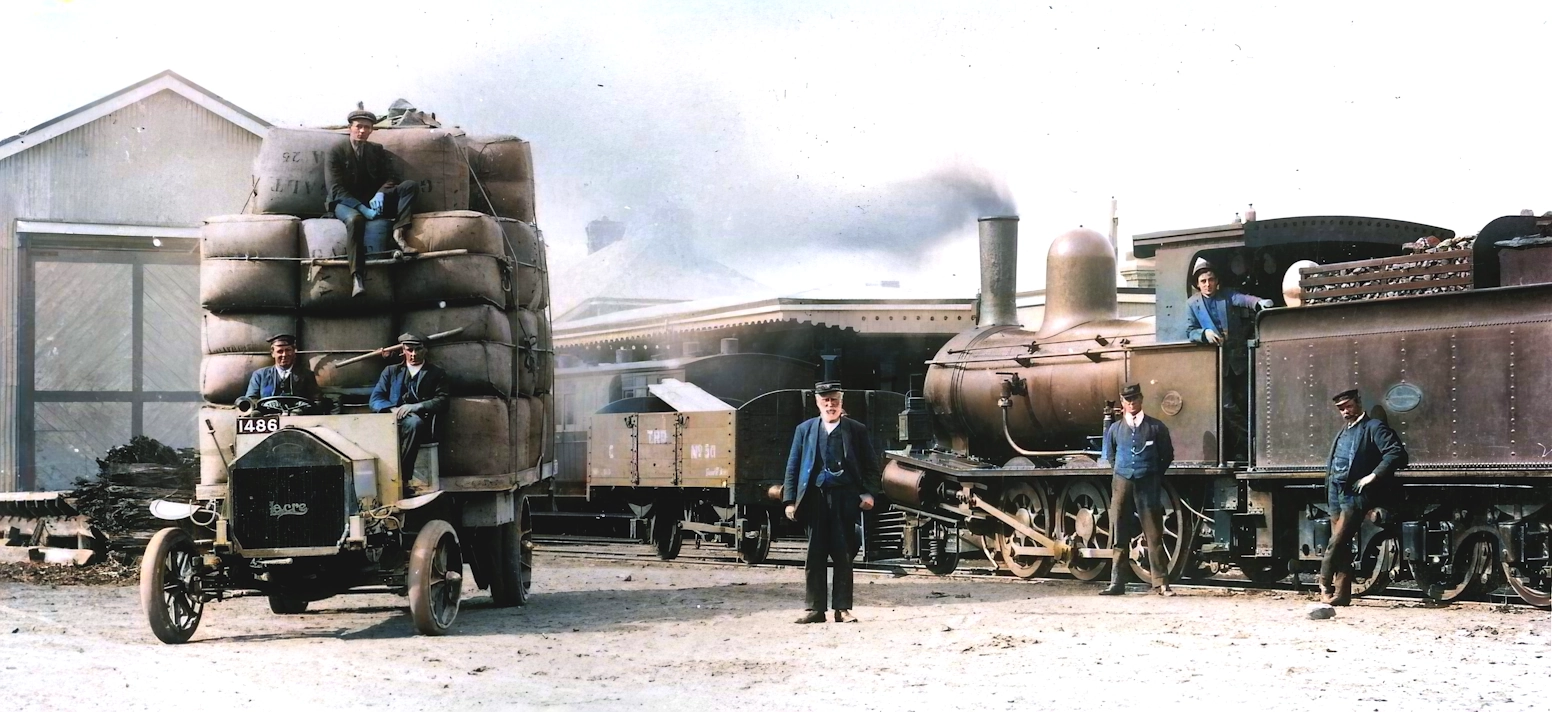
From The Mercury, Hobart Sat 21 Feb 1885 Page 2:
“Mr. William Blake, one of the carriers between Bothwell and the capital, conducts a brewery on the township, and his brother Mr. Isaac Blake intends, as soon as the place is repaired, to enter the lists at the Jolly Hatters, Melville-street, Hobart, against the mammoth Cascades Company. The Blakes have been brewers for many years at Bothwell, enjoying much success, hence the projected Hobart branch. The malt liquor at the Bothwell Brewery are of exceptionally high quality-mild, clear, sparkling, and free from the tendency to acidity so general in colonial ales, consequent on the excess of saccharine matter used in their manufacture. I have no hesitation in placing the well matured amber contents of a puncheon on Mr. Blake’s stillions side by side with the best imported draught, and but little if any, behind in quality the finest Bass bottled by Stone or Foster.”
Text source: Trove
Image source: Bothwell Historical Society collection (about 1920)
Blake’s House
View full size B&W
View in colour
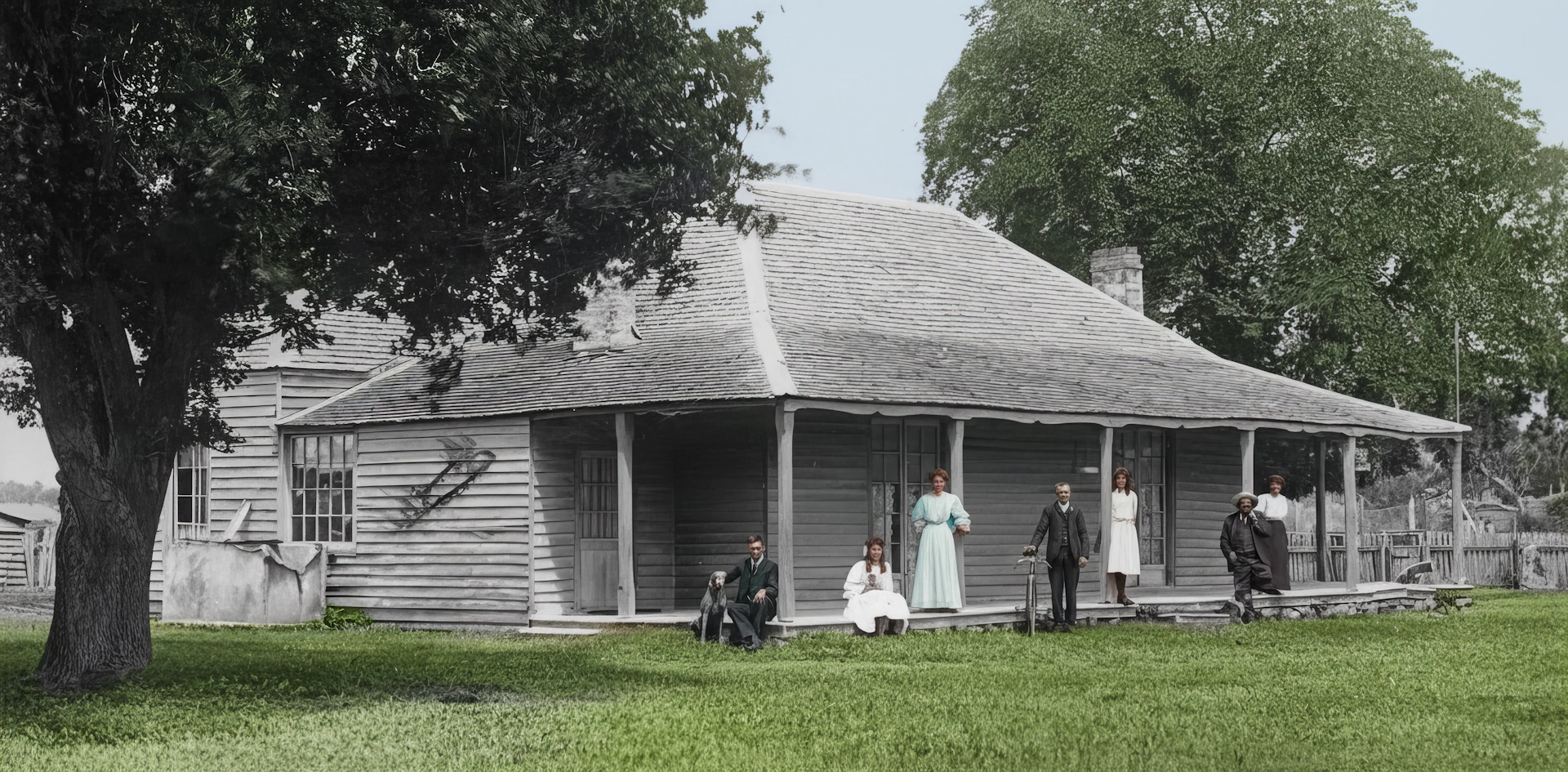
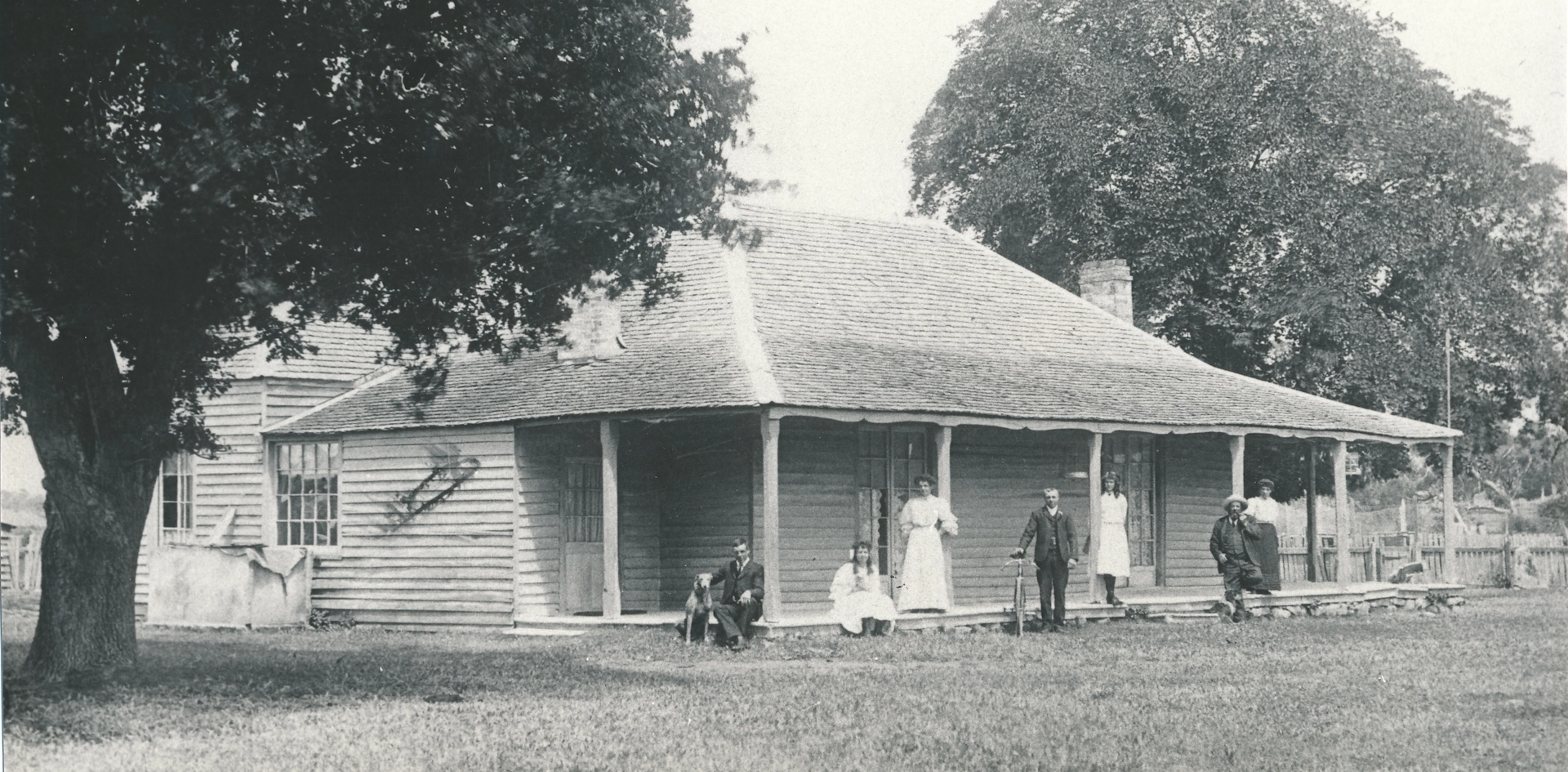
This description was attached to the image stored in the Historical Society’s archives:
“One of Bothwell’s earliest homes built about 1830 in Arthur Crescent by Philip Russell, manager of Dennistoun. Known as Blake’s house, it was lived in by AE Wheatley, Robert Barr, Rev Thomas Wigmore, Rev John Robertson and various Blakes and Bowdens before it was demolished and the trees felled earlier this [20th] century.
This photo is of the Blake family 1907.”
Image source: Bothwell Historical Society collection
Haymaking at Rothamay
View full size B&W
View in colour
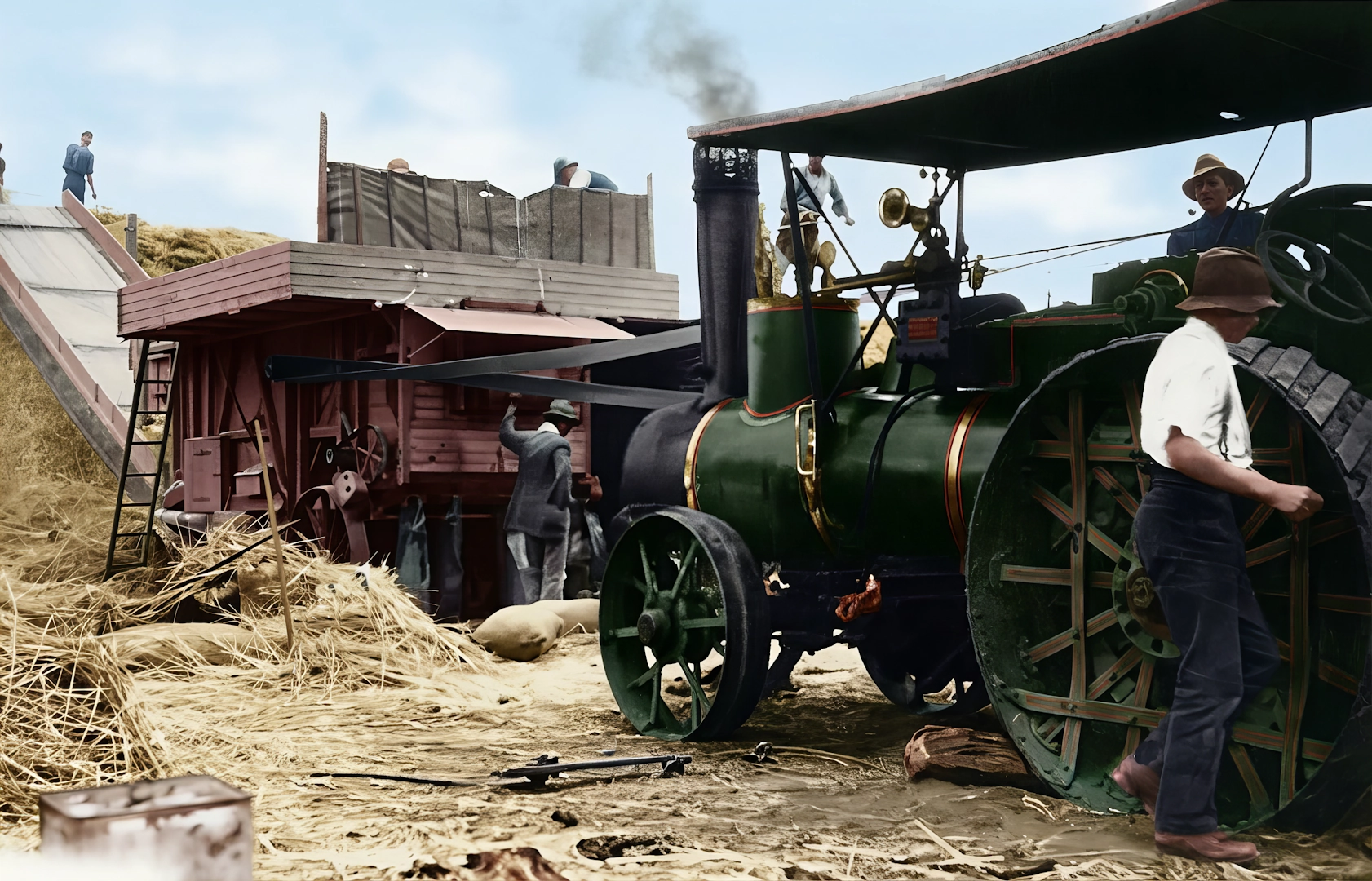
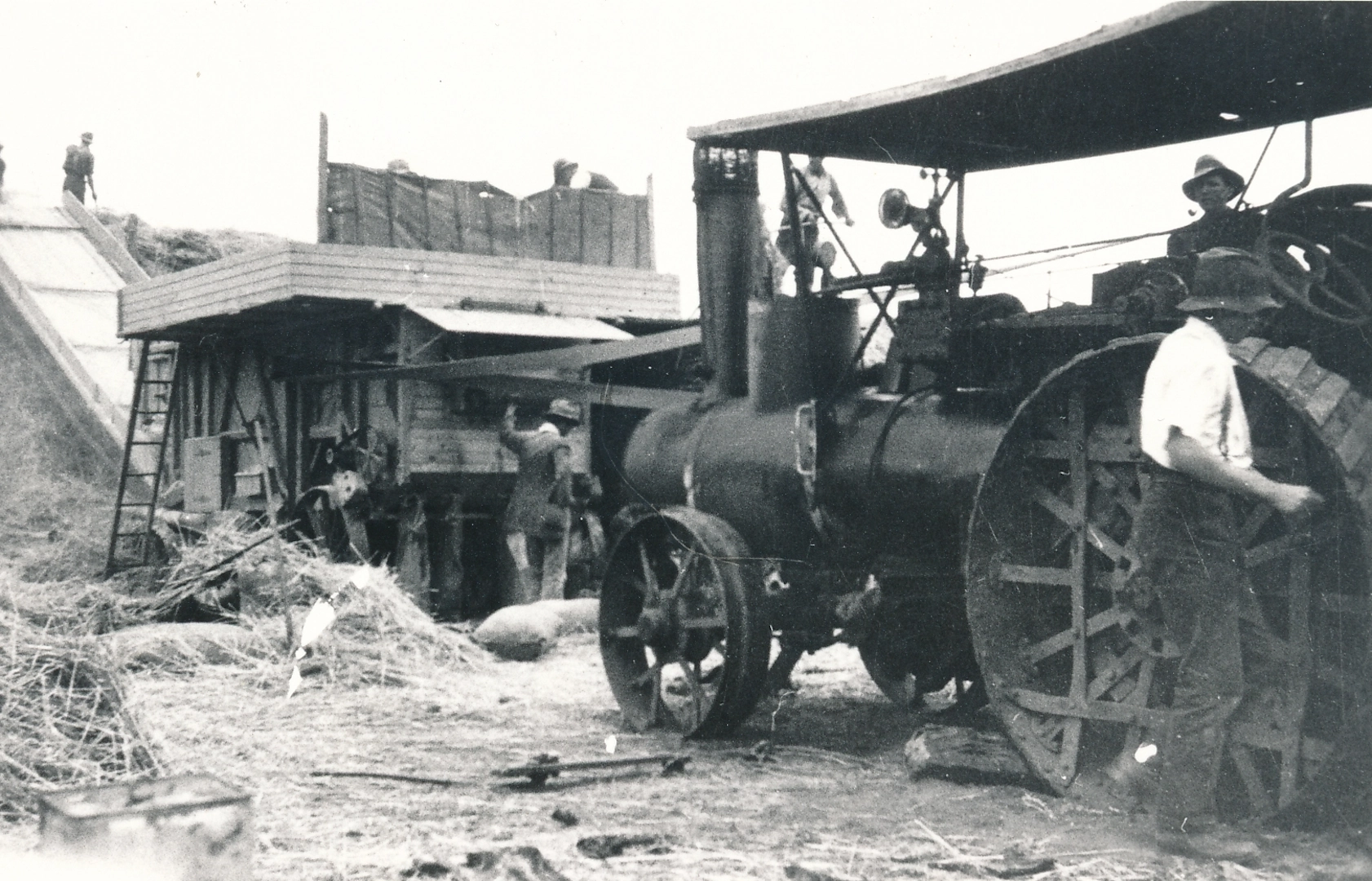
Cutting chaff on ‘Rothamay’ in the 1920s. Rothamay is a property in the Franklin Street area of Bothwell. The men on the tractor and standing adjacent to its wheel are Basil Reardon (standing) and John Campbell (driving).
Image source: Bothwell Historical Society collection
Information from Bothwell Revisited, Bothwell Historical Society, 2001
Apsley Township
View full-sized original
View in colour
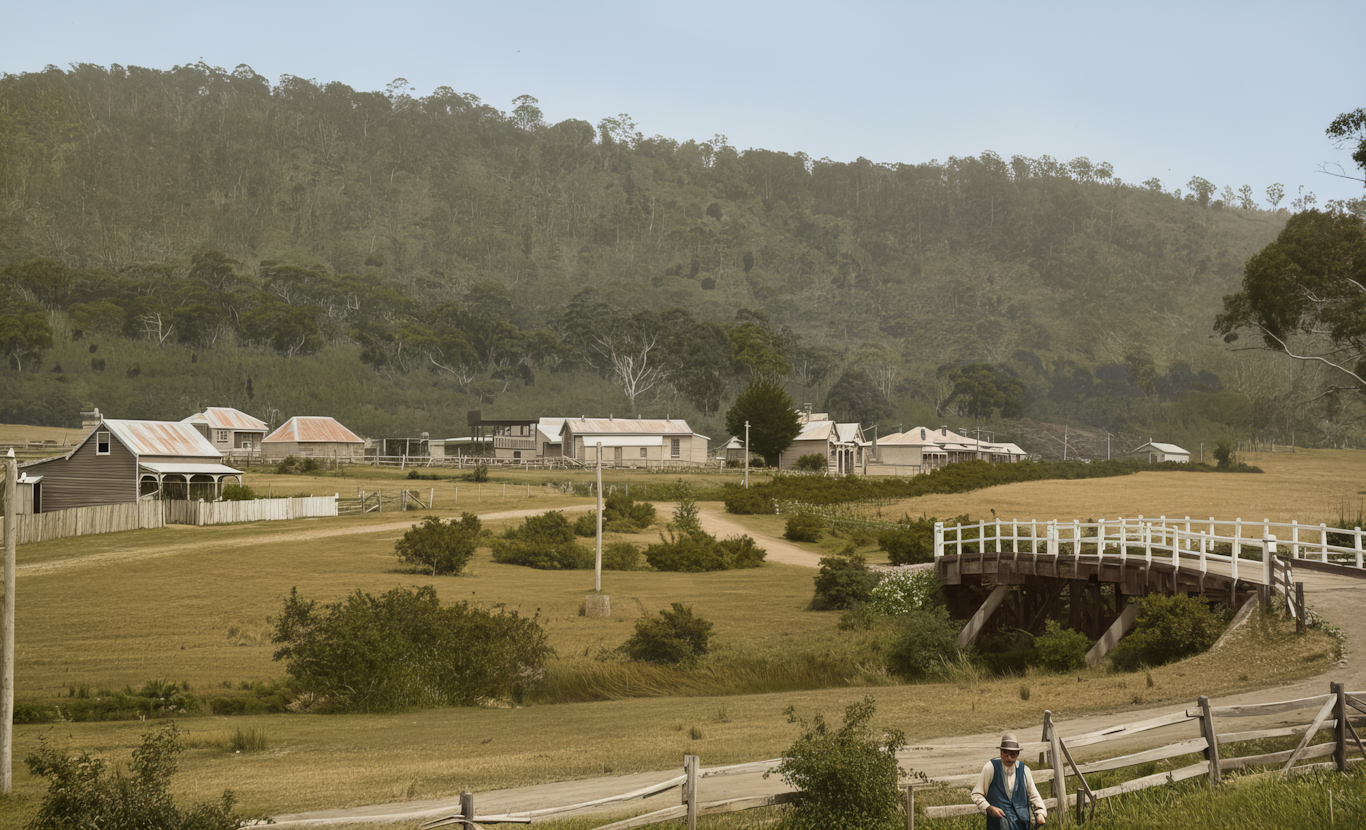
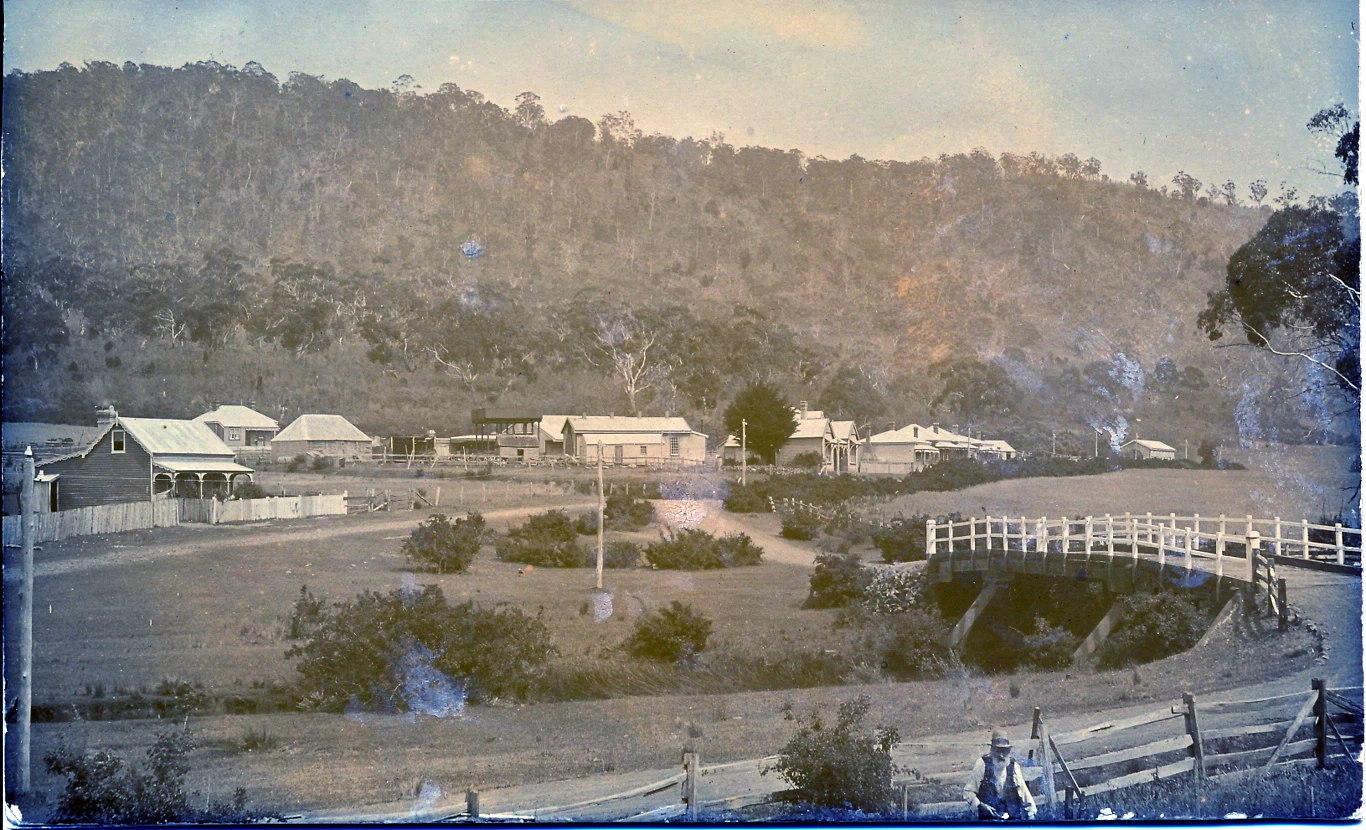
Apsley is a rural locality 15km ESE from Bothwell, historically linked to early 19th-century pastoral expansion and transport, specifically the 1891-1947 railway line which opened on April 22, 1891. This branch line was built to transport agricultural products and passengers, but closed in June 1947 due to competition from road transport. It was a hub for local agricultural, sheep/cattle farming, and coach services between Bothwell and Apsley.
Apsley remains a rural area, with a population of just 44 recorded in the 2021 census.
The image is interesting in that it is in colour, albeit muted. Colour photograhy did not become mainstream until the 1970s, though there were ealier niche versions as far back as the 1920s, and there were skilled artists who coloured monochrome prints by hand, though this does not look like it was coloured this way. The shot is probably close to when the railway closed in 1947, though the bearded man in the foreground looks as if he might be somwhat earlier. It remains an interesting artifact.
Image source: Bothwell Historical Society collection
Information is from Wikipedia which cites multiple sources
The Bothwell Courthouse – 1870-1890
View full size B&W
View in colour
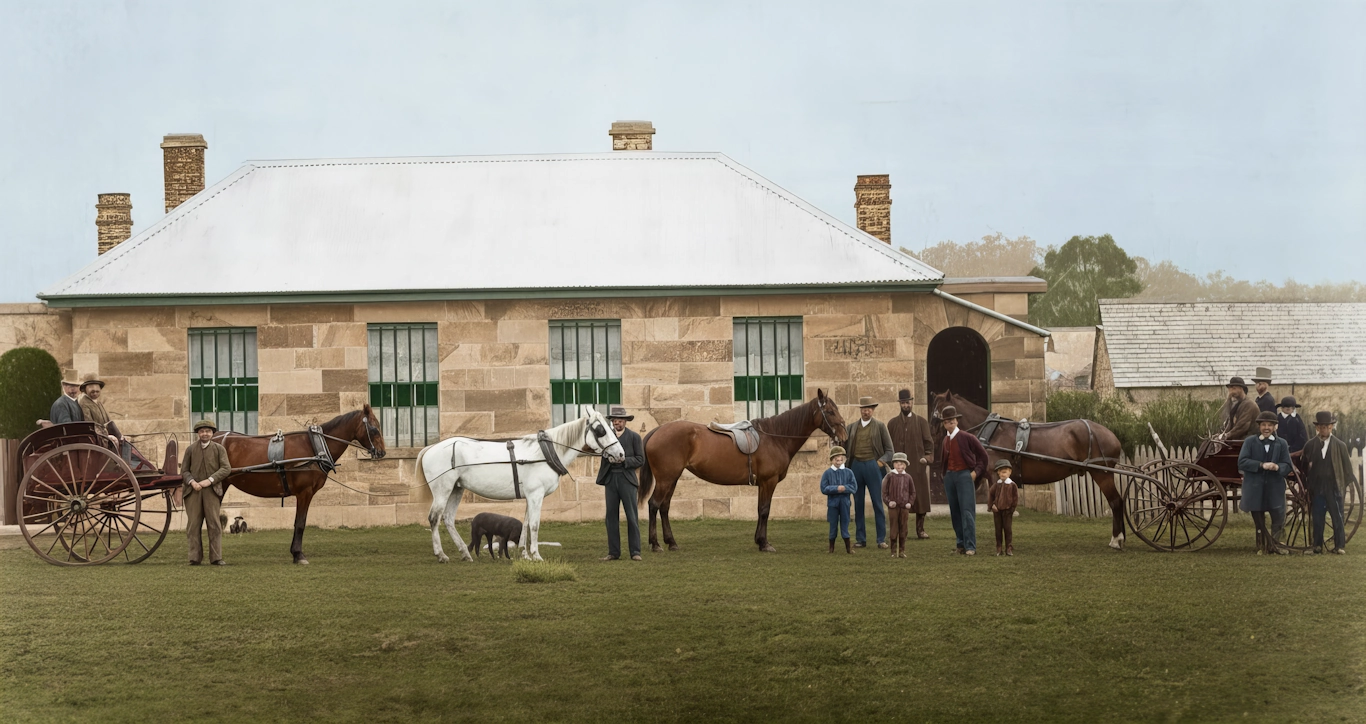
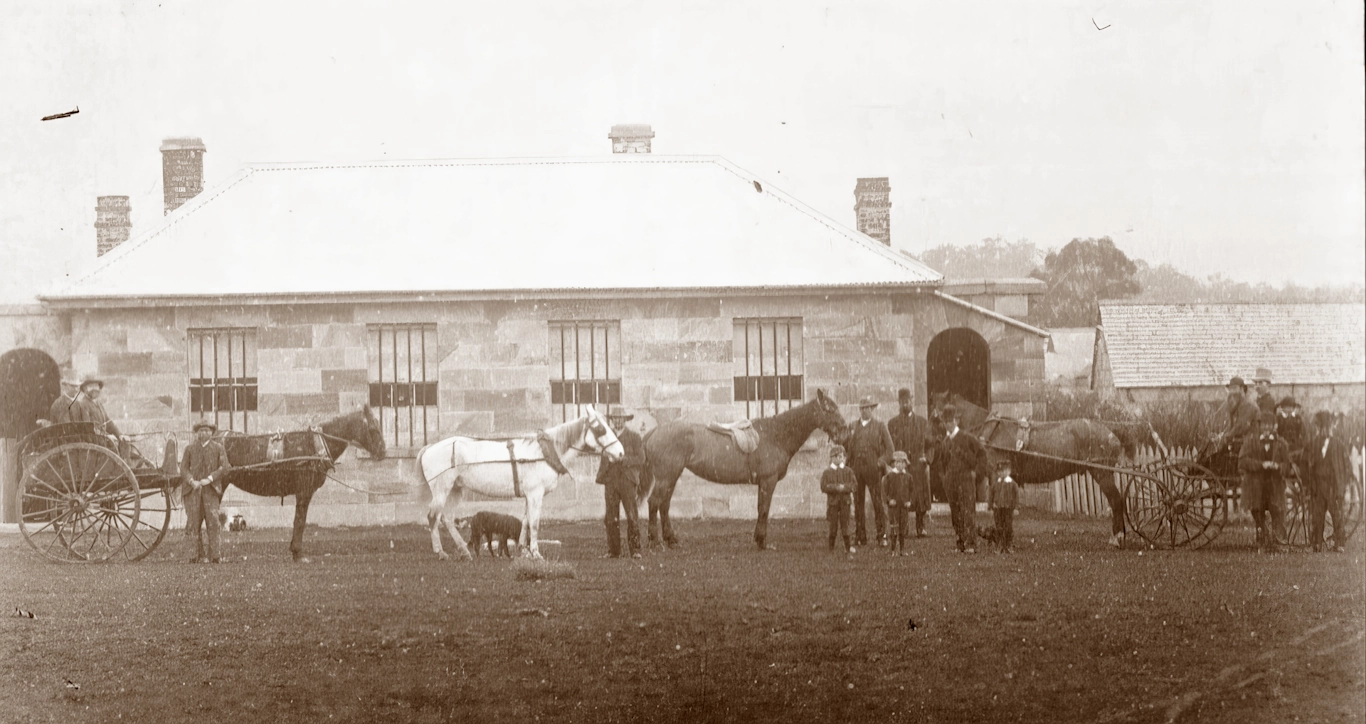
The image is a group of horses and carriages outside the Bothwell courthouse about 1870-1890.
The site of the old Bothwell Courthouse is in Croakers Alley, Bothwell, close to the current Bothwell Police Station.
Image source: https://libraries.tas.gov.au/Record/Library/SD_ILS-672877
Publication Information: Hobart : Anson Bros [between 1870 and 1890].